Hydraulic accumulators
Mobile | Industrial | Marine | Energy
Different types of accumulators
We supply the hydraulic accumulator you need for your hydraulic application.
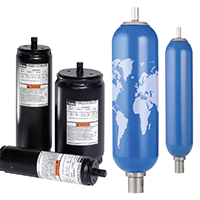
What is a hydraulic accumulator and why do you need it?
A hydraulic accumulator stores fluid under pressure and can serve a number of functions within a hydraulic system. It´s an item that can provide years of trouble-free service. Accumulators can take a specific amount of fluid under pressure and store it. The fluid is then released when it´s required to perform a specific task in the hydraulic system. Functions range from compensation of leakage oil or temperature fluctuations to dampening vibrations.

Using hydraulic accumulators results in substantial energy savings and an increased system lifespan
Adding an accumulator to a hydraulic system offers a number of advantages. The possibility to use smaller pumps, lower installed power, immediate availability of energy, or less heat production, to name just a few. Simple maintenance and installation of the hydraulic accumulator is another benefit. Increased service lifetime of accumulators and unlimited storage life with no fatigue and no inertia because of the design of hydraulic accumulators.
Applications that require a lot of power for limited periods of time benefit most from accumulators
Accumulators basically comprise of two compartments: one of the compartments is filled with gas; the other compartment, which is connected to the hydraulic circuit, is filled with hydraulic fluid. The accumulator shell is made of carbon steel, stainless steel or aluminium. Depending on separating elements, we can distinguish three types of hydraulic accumulators: bladder accumulators, diaphragm accumulators, and piston accumulators.
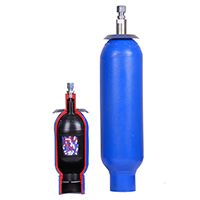
Bladder accumulator
A bladder accumulator is the most commonly used hydro-pneumatic accumulator. We supply bladder accumulators for high and low pressure applications.
Type of bladder accumulators
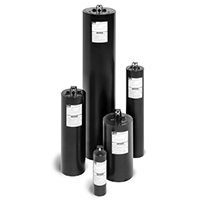
Piston accumulators
Piston accumulators use pistons as separating elements and can handle much higher gas compression ratios and flow rates. We also supply piston seals and repair kits.
Type of piston accumulators
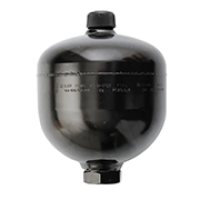
Diaphragm accumulators
Diaphragm accumulators have a relatively small fluid storage capacity. We supply diaphragm accumulators with high compression ratios of up to 8:1.
Type of diaphragm accumulators
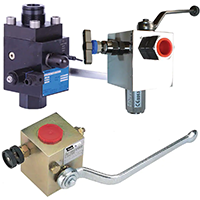
Accumulator accessories
Safe usage of hydraulic accumulators with accumulator accessories from renowned manufacturers. We supply testing devices, mounting kits and shut-off blocks.
Type of accumulator accessories
We supply high quality brands hydraulic accumulators for various demanding applications. These include Parker Hannifin, Olaer, FCH, Greer, Hydac, QHP, Bosch Rexroth, and others on request. Our scope of supply covers the full range of different accumulator types (bladder, piston, diaphragm) and accumulator accessories, such as safety valve blocks and testing devices. We supply genuine spare parts for all the hydraulic manufacturers referred to above.
Applications that utilise large flows at high speeds may use accumulators for energy storage. When required, the accumulator pushes fluid into the hydraulic circuit to add to the pump flow. When the actuators in the hydraulic system are not in motion, the accumulator will refill. Accumulators can also operate as energy sources during normal operation of the system. Accumulators that are weight- or spring-loaded can also be used in industrial applications.